
Lightweight, Engineered Solutions for Earth Retention and Slope Performance
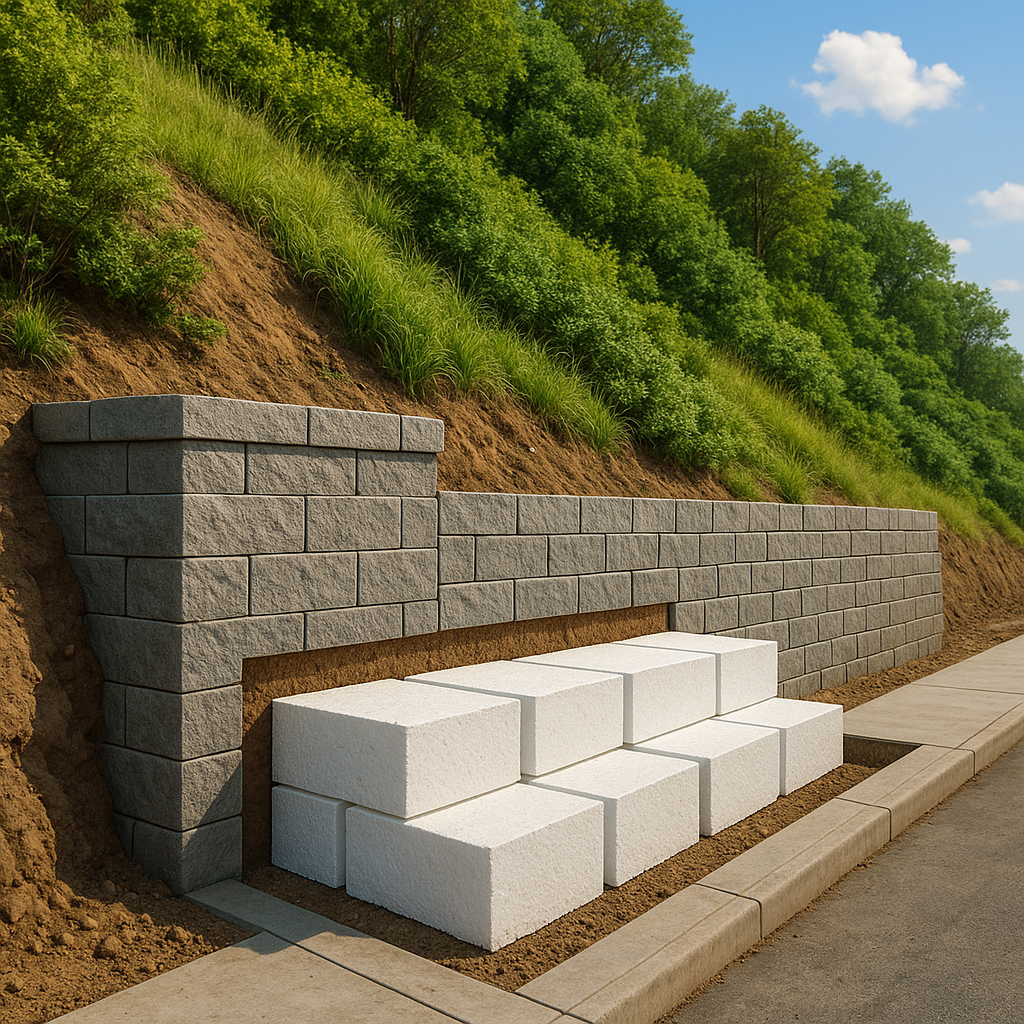
EPS Geofoam is a proven solution for reducing lateral pressure and improving stability in retaining wall systems and slope stabilization projects. With its lightweight yet structurally stable properties, Geofoam helps engineers and contractors build safer, more durable retaining structures while minimizing excavation, backfill, and load on underlying soils.
Whether you’re designing a mechanically stabilized earth wall (MSE), rebuilding a hillside, or preventing landslide conditions, Geofoam offers reliable support with reduced risk of failure, faster installation, and improved long-term performance.
Why Geofoam Works for Retaining Walls & Slopes
- Reduces Lateral Earth Pressure
One of the primary benefits of EPS Geofoam is its ability to dramatically reduce lateral loads on retaining walls. Geofoam weighs only 1–2% as much as traditional soil, lowering horizontal pressure and reducing wall thickness, reinforcement, and construction costs.
- Reduces Lateral Earth Pressure
- Ideal for Soft or Unstable Soils
In areas with compressible or weak soils, backfilling with heavy material can increase the likelihood of movement or settlement. Geofoam’s low density limits vertical and horizontal pressure, improving performance over time.
- Ideal for Soft or Unstable Soils
- Minimizes Surcharge Loads Behind Walls
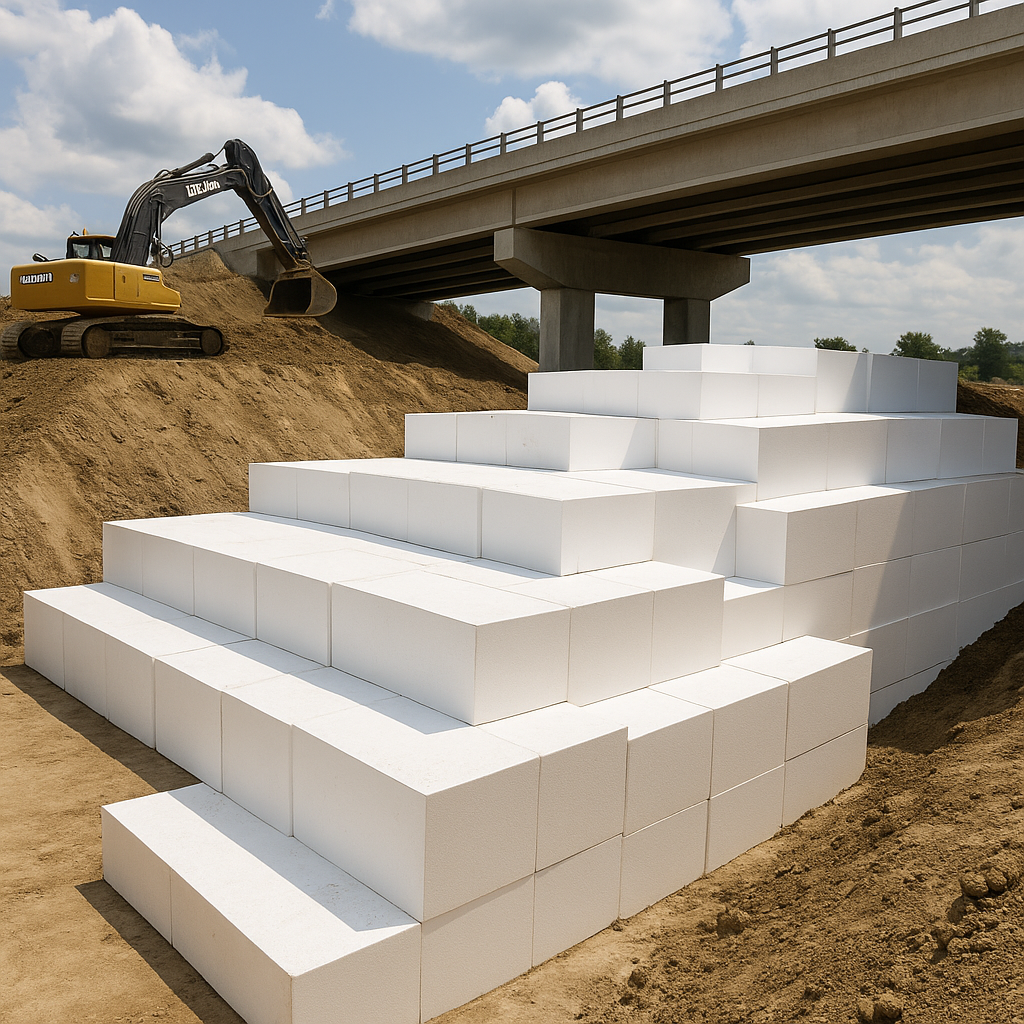
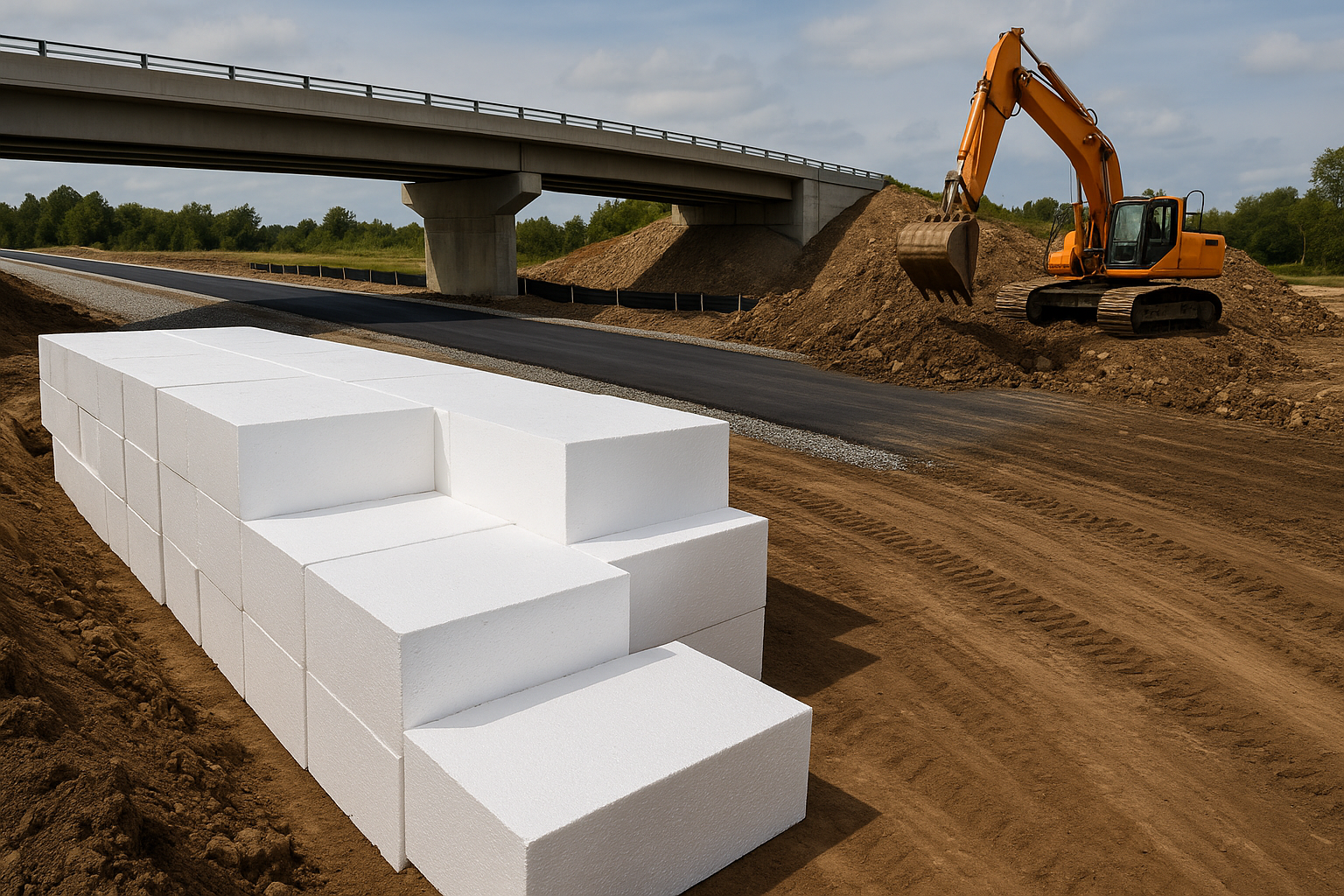
When retaining walls are placed near roads, bridges, or buildings, traditional soil fill adds surcharge loads that can compromise stability. Geofoam helps eliminate those additional loads, allowing for safer design near structures.
- Minimizes Surcharge Loads Behind Walls
- Accelerates Construction
Geofoam blocks are lightweight, precut, and easy to install, reducing construction time. There’s no need for compaction, special fill equipment, or curing time—especially helpful in tight job sites or poor weather conditions.
- Accelerates Construction
- Predictable Engineering Performance
Geofoam offers consistent compressive strength and deformation characteristics that meet ASTM D6817 standards. Engineers can confidently design for uniform load distribution, settlement control, and structural reliability.
- Predictable Engineering Performance
- Compatible with Steep Slopes and Terraced Walls
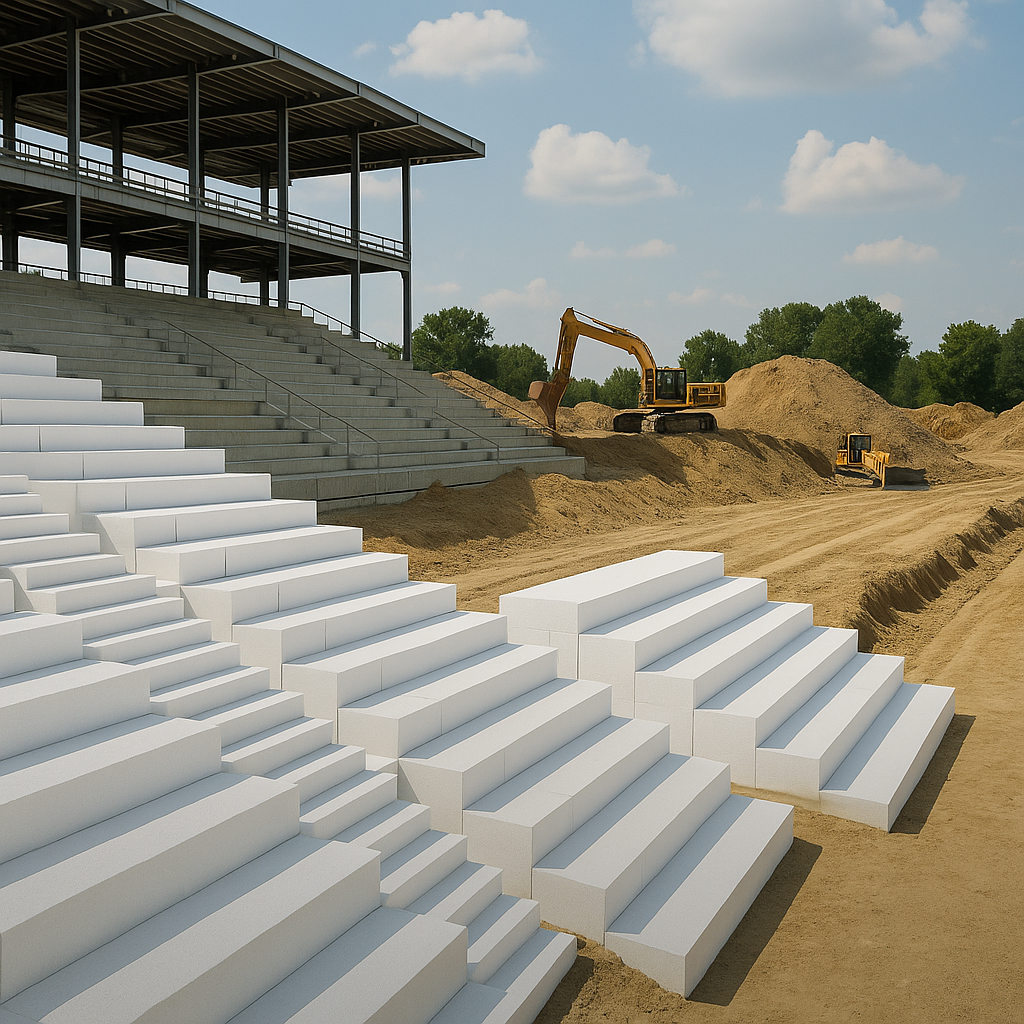
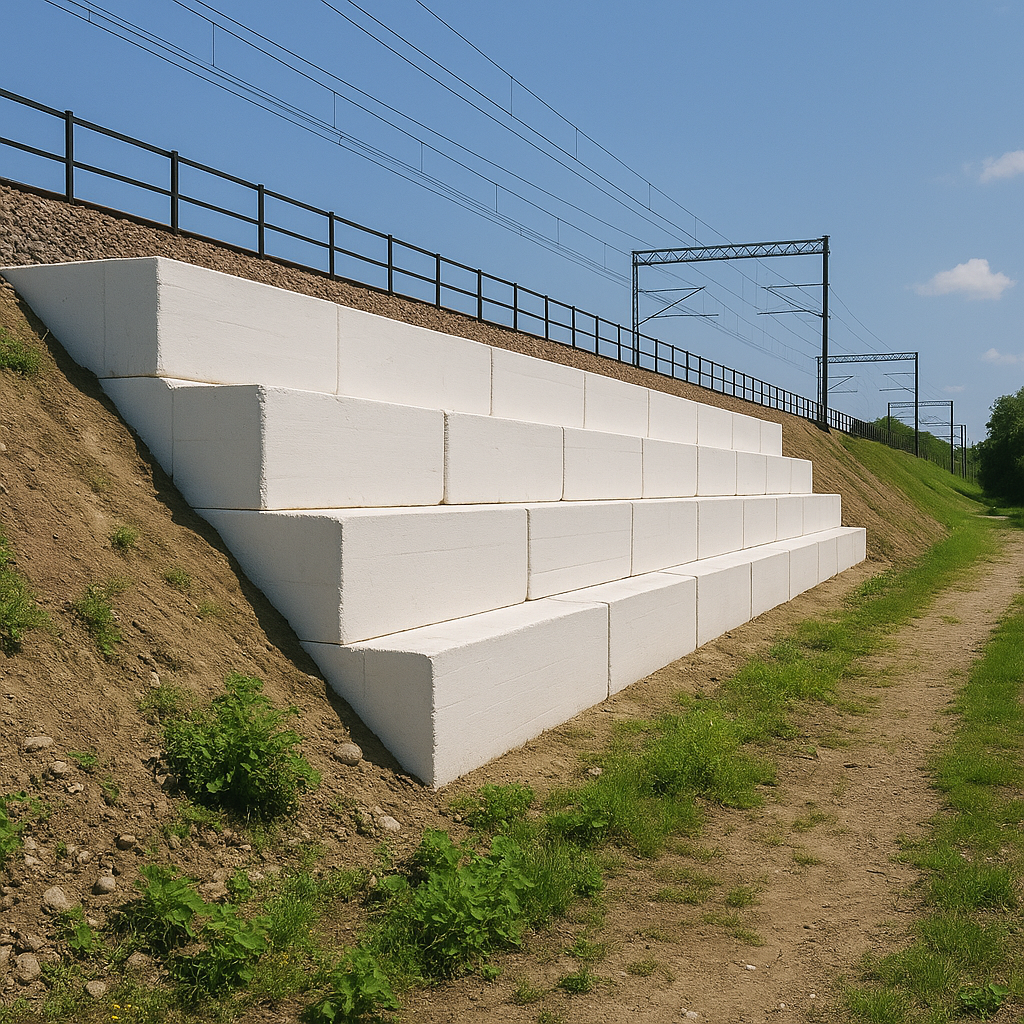
Geofoam can be cut and stacked to match slope geometry or step walls into terraced hillside designs—perfect for green retaining walls, aesthetic landscaping, or structural slope repairs.
- Compatible with Steep Slopes and Terraced Walls
Design & Installation Considerations:
- Layered Block Systems
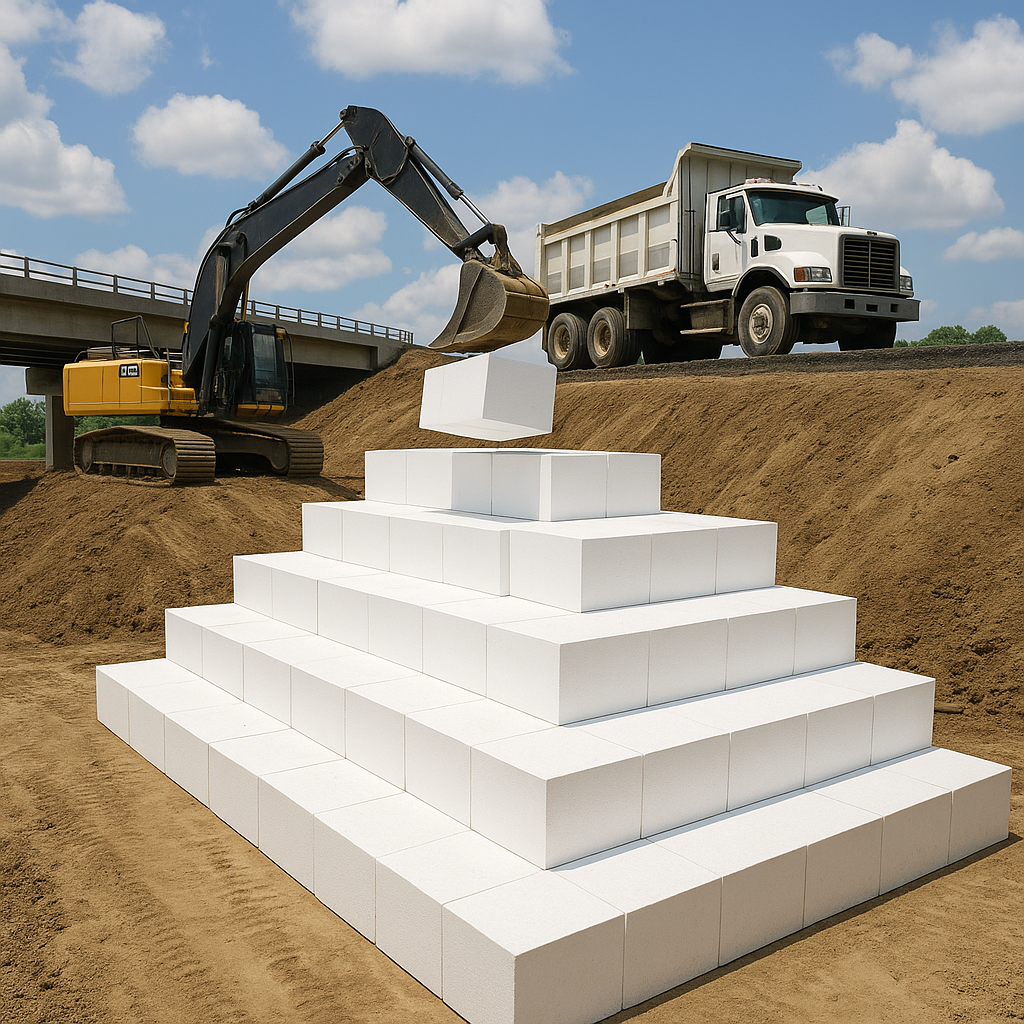
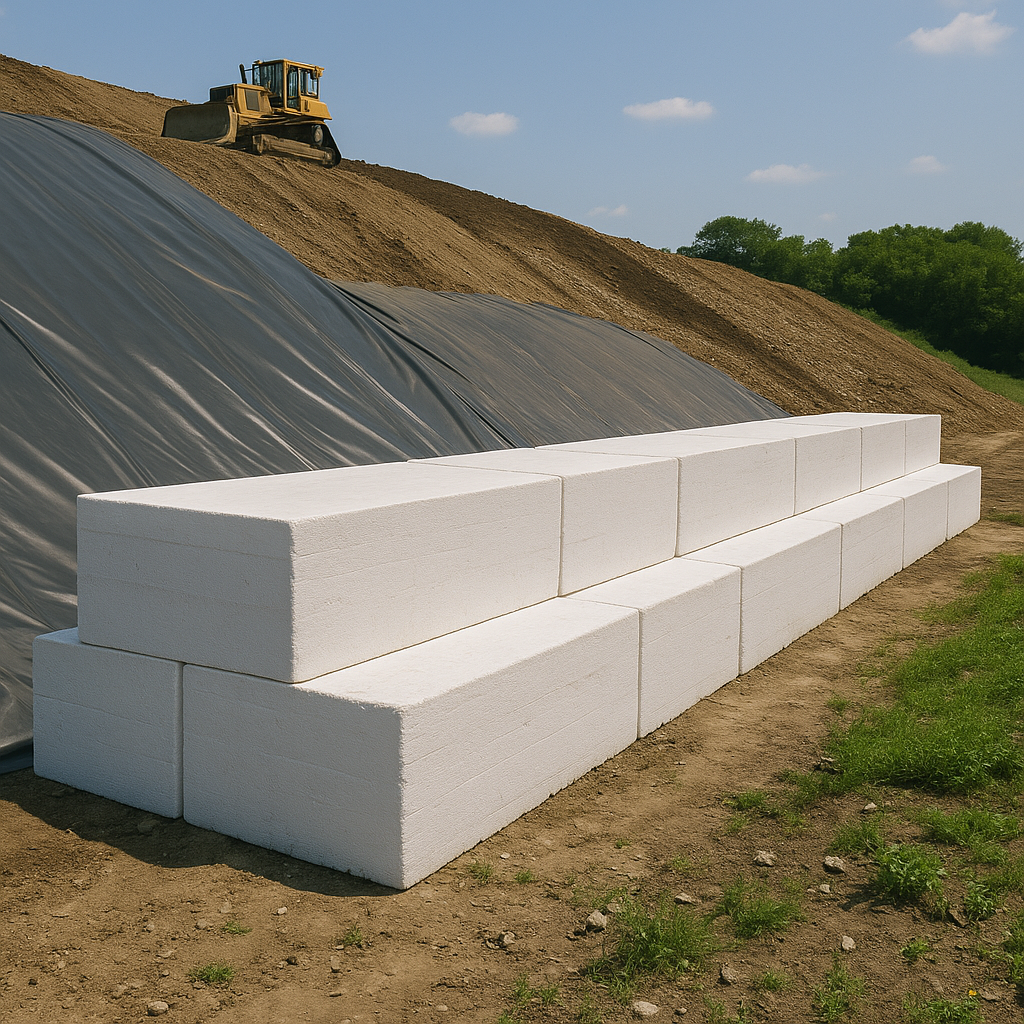
Geofoam is installed in stacked, staggered layers to create uniform support. Blocks can be custom-cut to follow grade contours or shape complex footing areas. - Protection Layers
A geotextile fabric or vapor barrier may be placed over the foam before pouring concrete. In commercial builds, a sand cushion or rigid board insulation may also be added. - Concrete Slab Pour
Once protected and leveled, the concrete slab is poured directly above the Geofoam—ensuring a fast, stable, and insulated foundation. - Edge Isolation
Geofoam is compatible with expansion joints, edge isolation foam, and under-slab heating or insulation systems.
- Layered Block Systems
Applications in Landscaping & Green Roof
A DOT project in a suburban canyon required replacing a failing timber retaining wall. Engineers selected Geofoam to backfill behind a new MSE wall in order to avoid surcharge loads on buried sewer lines and minimize wall size. Due to limited site access, Geofoam was hand-carried and installed without heavy equipment. The wall was completed two weeks ahead of schedule, and Geofoam helped reduce the wall thickness by 30%.
Retaining Wall Backfill
Use Geofoam behind segmental, gravity, or MSE retaining walls to reduce lateral loads and settlement. This helps extend wall life and reduce reinforcement costs.
Hillside Terracing
EPS Geofoam supports stepped, multi-level terrace walls or planter zones, especially in residential, commercial, or resort developments where aesthetic slope shaping is important.
Roadway Cut Slope Stabilization
On highway or rail cut slopes, Geofoam can be placed to resist movement and reshape the terrain safely without overburdening underlying soils.
Fill Over Weak Soils Near Structures
Geofoam is ideal where fill is required behind walls near homes, buildings, utilities, or foundations that cannot tolerate heavy surcharge loads.
Sliding Slope Remediation
In active landslide zones or areas with recurring movement, Geofoam is used to replace failed soil zones with lighter, stable fill to mitigate risk and re-establish slope geometry.
Advantages for Contractors, Structural Engineers & Developers
- Reduces excavation and fill hauling costs
- Eliminates settlement risk under slabs
- Speeds up project timelines by avoiding compaction steps
- Lightweight—ideal for areas with limited access or structural loading limits
- Compatible with radiant heat systems, insulation, and waterproofing layers
- Maintains performance through freeze–thaw cycles and variable site conditions
- Fully recyclable and environmentally inert
Secure Your Slopes with Confidence
Geofoam is redefining how we build and stabilize retaining walls and slopes. Its performance under pressure, combined with its low weight and ease of installation, makes it the engineered choice for earth retention and terrain control.
Contact us today to learn how Geofoam can support your next retaining wall or slope stabilization project—on time, on grade, and on budget.