
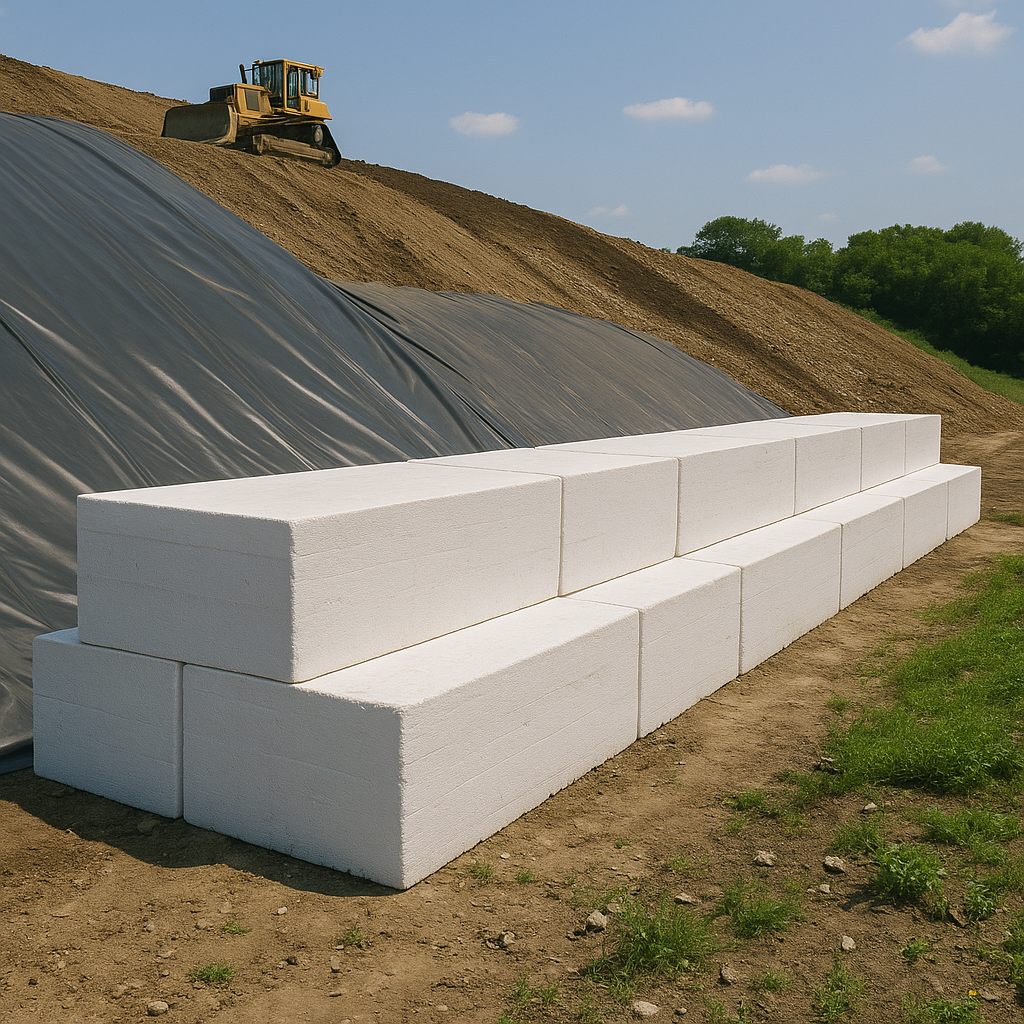
Why Geofoam EPS?
Expanded Polystyrene (EPS) Geofoam is the smart choice for modern construction projects where weight, speed, and reliability matter most.
Unlike traditional fill materials, EPS Geofoam delivers high strength with minimal weight, reducing stress on soil and structures while offering unmatched design flexibility. It’s a proven solution that helps engineers, architects, and contractors build faster, safer, and more cost-effectively.
What is GeoFoam?
-
Lightweight Strength – Up to 100 times lighter than soil, yet strong enough to support heavy loads.
-
Faster Construction – Easy to install, reducing labor costs and project timelines.
-
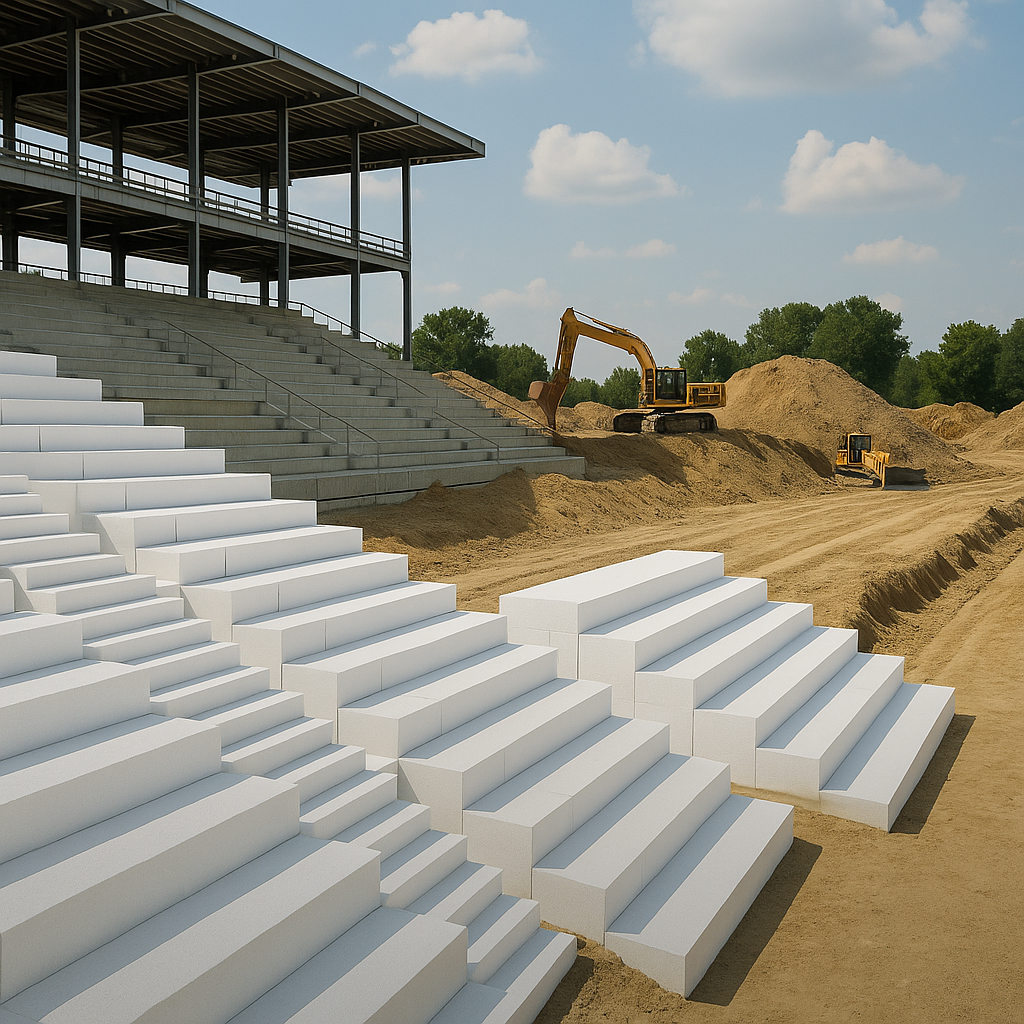
Versatile Applications – Ideal for roads, bridges, stadium seating, landscaping, and more.
Resources
Explore our library of technical resources on EPS Geofoam. These downloadable PDFs provide in-depth information on product ratings, insulation applications, lightweight fill solutions, and the environmental benefits of EPS. Use them as quick reference guides to support your project planning and design.
FAQ
Have questions about EPS Geofoam? Our Frequently Asked Questions cover everything from product performance and installation to environmental benefits. Browse below to find clear answers to the most common topics.
What is Geofoam?
Geofoam is a lightweight, engineered fill material made from Expanded Polystyrene (EPS). It is used in construction and landscaping projects to replace traditional soil or other heavy fills, reducing load on weak ground.
Where is Geofoam commonly used?
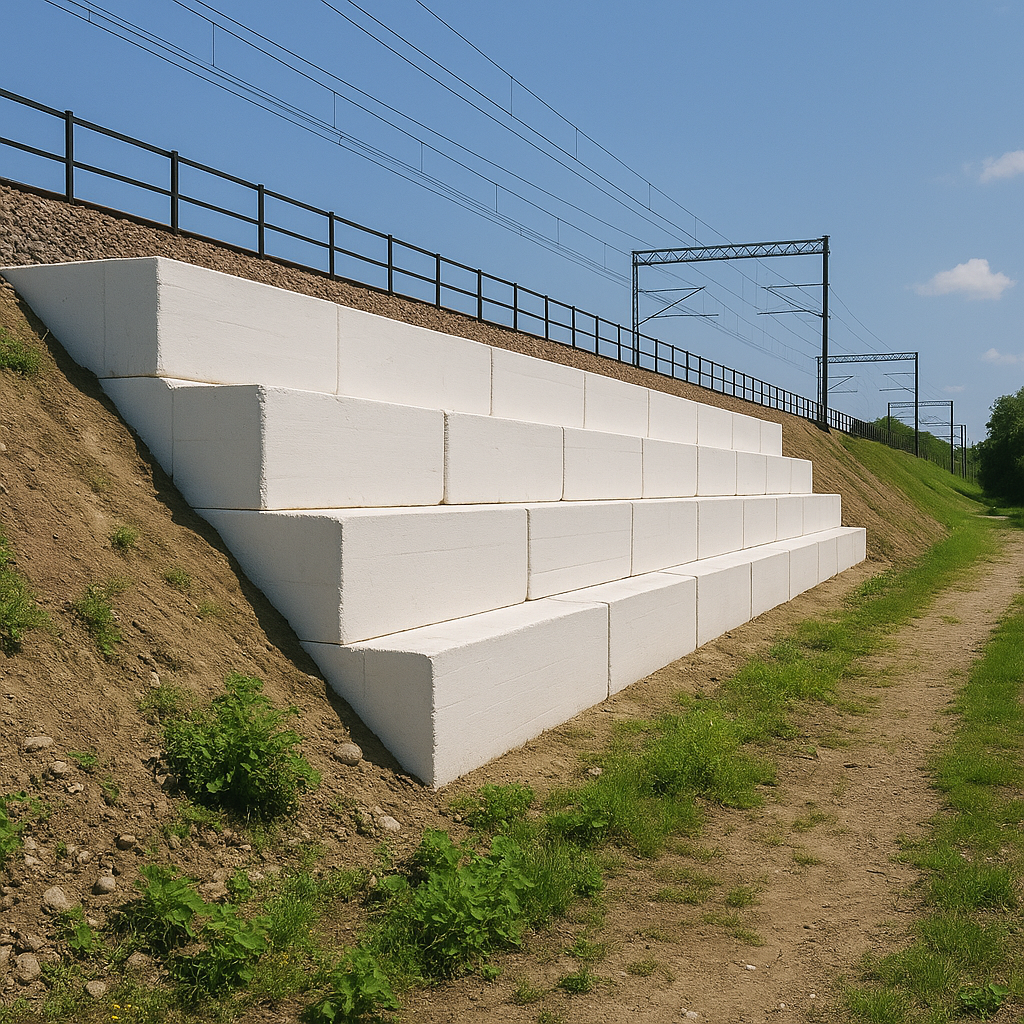
Geofoam is used in roadways, bridge embankments, retaining walls, stadium seating, landscaping, building foundations, green roofs, and many other civil and geotechnical applications.
Why choose Geofoam over traditional fill materials?
Geofoam weighs up to 100 times less than soil, reducing settlement and load on underlying structures. It also speeds up construction, improves stability, and is easy to install with minimal labor and equipment.
How strong is Geofoam?
Despite being lightweight, Geofoam is manufactured in different densities and compressive strengths. It can support heavy loads from highways, railways, and buildings when designed correctly for the application.
Is Geofoam environmentally safe?
Yes. EPS Geofoam is non-toxic, chemically stable, resistant to mold and rot, and does not leach harmful substances into soil or groundwater. It can also be recycled or reused in other applications.
Can Geofoam be used in wet or cold climates?
Absolutely. Geofoam is moisture-resistant and maintains its structural integrity in wet conditions. It is also not affected by freeze-thaw cycles, making it ideal for climates with harsh weather.
How is Geofoam installed?
Geofoam blocks are delivered pre-cut or in large shapes and are stacked or placed directly into the project site. Installation is quick and often requires only basic equipment, reducing project time and labor costs.
Does Geofoam last long?
Yes. Geofoam is extremely durable, with an expected lifespan of more than 50 years when properly installed and protected from direct sunlight and petroleum-based solvents.