
Smart, Lightweight Fill for Safer Containment and Flood Control
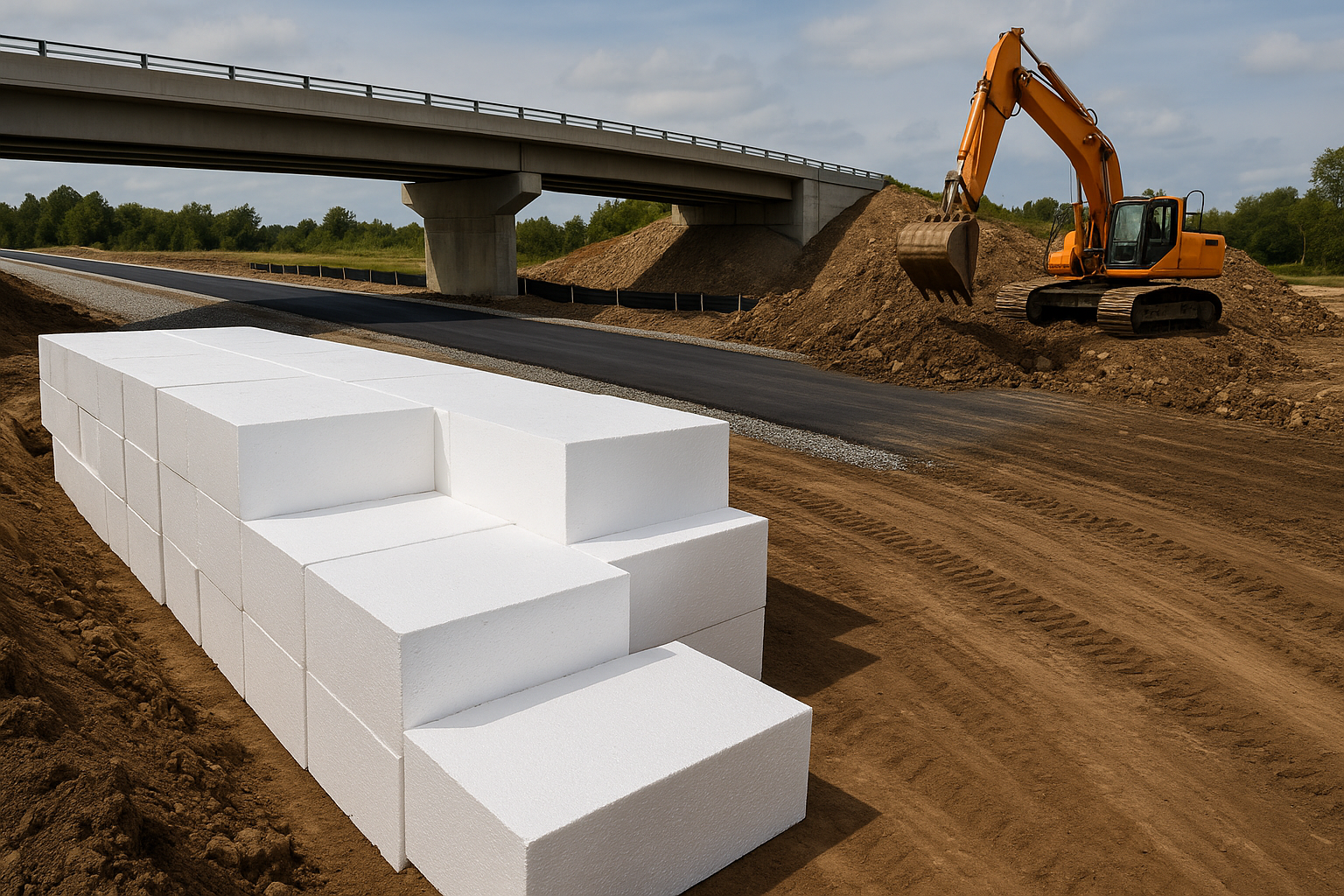
EPS Geofoam is increasingly being used in environmental and civil infrastructure projects where weight reduction, long-term stability, and predictable performance are essential. In landfill construction, levee upgrades, and flood control systems, Geofoam provides engineered support without overloading sensitive soils or aging embankments.
Its low density (1%–2% of traditional soil), excellent durability, and easy handling make it ideal for environmentally sensitive projects where heavy equipment, compaction, or excessive load could compromise safety, compliance, or functionality.
Why Geofoam Is Ideal for Landfills & Levees
- Reduces Vertical and Lateral Loads
Whether used to build up embankments, cap a landfill, or raise a levee, Geofoam reduces the risk of settlement and failure. Its ultra-lightweight structure reduces downward pressure on geomembranes, liners, or soft subgrade layers—ensuring long-term performance and containment.
- Reduces Vertical and Lateral Loads
- Prevents Settlement Over Buried Infrastructure
Many landfills and levees cover sensitive or fragile systems—liners, pipes, gas collection networks, or drainage layers. Geofoam adds virtually no weight, minimizing strain and preventing cracking, deflection, or breach.
- Prevents Settlement Over Buried Infrastructure
- Easy to Shape and Install
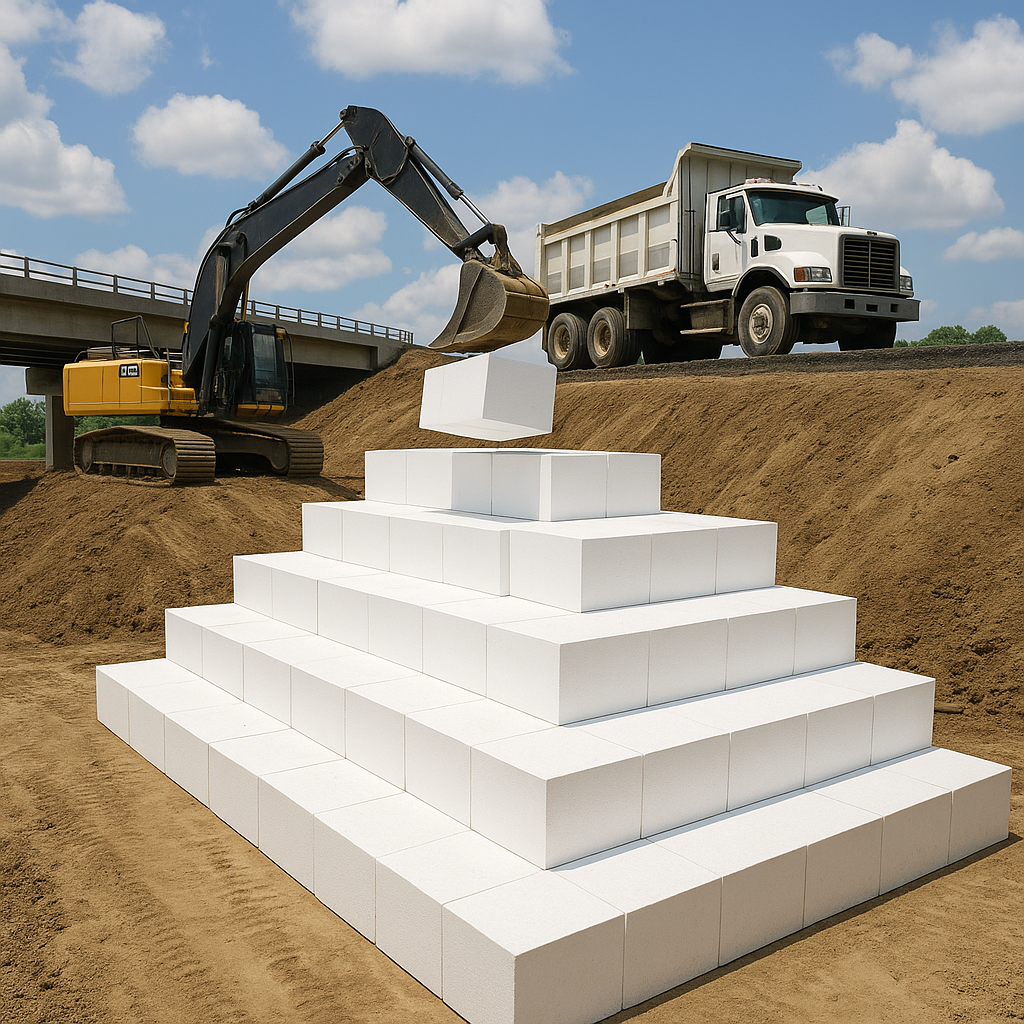
Geofoam blocks are precut, stackable, and customizable. Complex slope shapes, curved levees, or tiered landfill caps can be built quickly without heavy earth-moving equipment, even in tight or difficult terrain.
- Easy to Shape and Install
-
- Resists Moisture and Biological Decay Geofoam is inert, non-toxic, and does not absorb water—making it a safe option for use under liners or in saturated floodplain areas. It resists microbial degradation, mold, and long-term exposure to wet or chemically active environments.
-
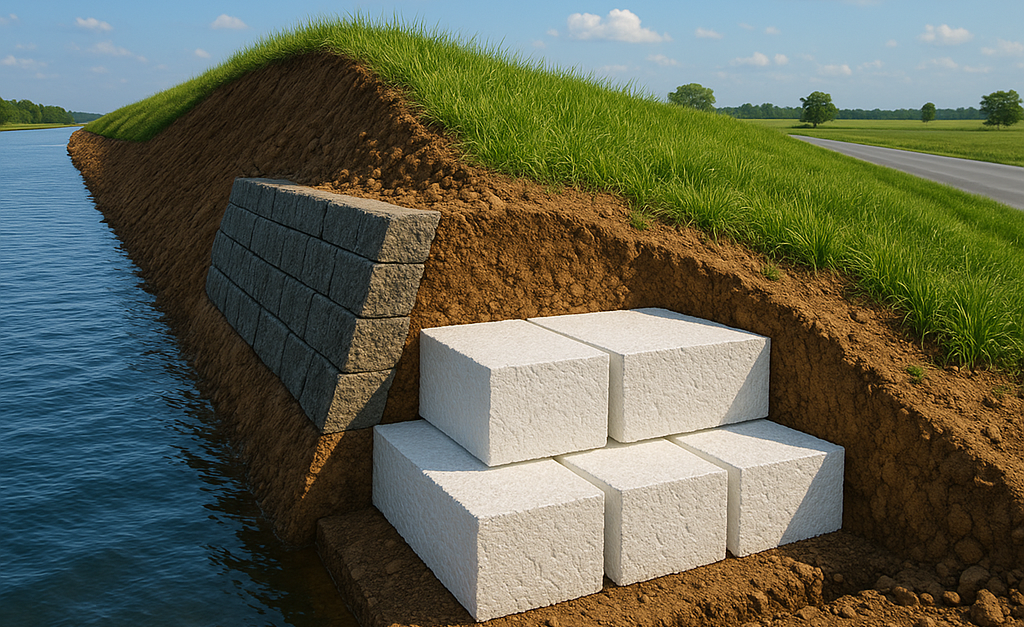
- Ideal for Levee Raising in Urban Areas Many levee upgrades occur in constrained or populated areas where soil fill isn’t feasible due to settlement, weight, or limited access. Geofoam enables vertical expansion with minimal structural impact and no need for surcharge loads.
-
- Improves Safety and Compliance Because EPS Geofoam is manufactured to meet ASTM D6817 standards, its performance is predictable. This supports compliance with environmental and structural regulations during both design and construction phases.
Installation Considerations:
- Leveling Base
Geofoam is typically placed on a compacted granular base or leveling sand layer. No compaction is required above or below. - Membrane Compatibility
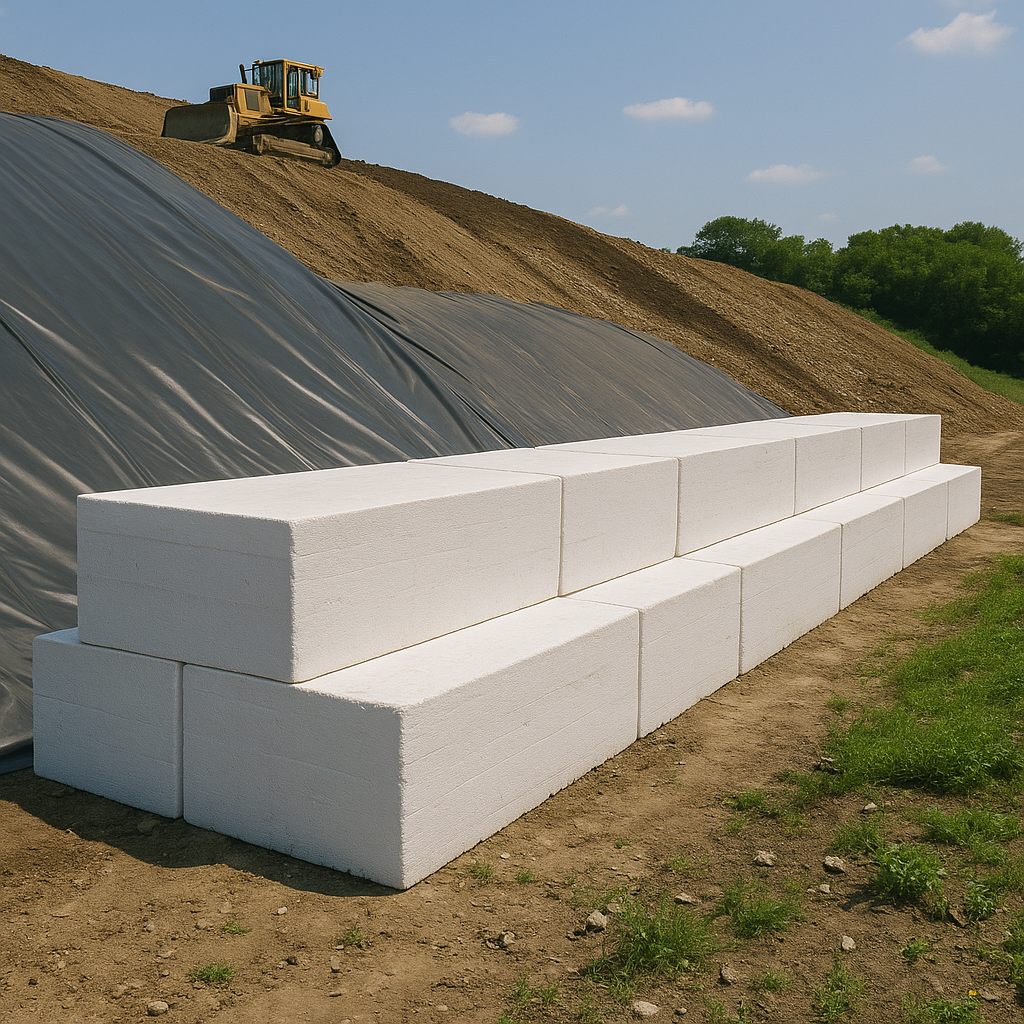
Geofoam is safe for use beneath HDPE, LLDPE, and other geomembranes when protected by geotextile or barrier layers. It does not leach chemicals or cause plasticizer issues. - Hydrocarbon Protection
In landfills or industrial levees where hydrocarbons may be present, a separation membrane may be used to shield Geofoam from long-term exposure. - Surface Loading
Geofoam can be layered and protected with geogrid, concrete slab, or other protective systems for surface traffic, maintenance roads, or slope erosion control.
- Leveling Base
Applications in Landfills & Levees
During a levee enhancement project along the Mississippi River, engineers faced the challenge of raising levee height without increasing load on the original clay embankment and aged foundation. EPS Geofoam was used to build up 6 additional feet of levee while maintaining slope stability and minimizing impact on buried pipelines and groundwater collection systems. The retrofit was completed on schedule and met all FEMA elevation requirements with no additional ground settlement.
Landfill Closure Caps
Geofoam is used beneath final cover systems on capped landfills to reduce stress on liners, improve grade control, and support vegetative layers—especially where steep slopes or drainage features are present.
Levee Widening & Heightening
In levee retrofit projects, Geofoam can be used to raise height without increasing pressure on existing structures or foundations—ideal for FEMA and USACE-compliant flood control improvements.
Soft Soil Embankments
Floodplain projects or waste containment zones built over marshy, compressible soils can benefit from Geofoam’s lightweight and non-settling nature. It enables engineered embankments without complex soil improvement work.
Slope Reinforcement for Floodwalls
EPS blocks can be installed behind floodwalls or sheet pile walls to limit lateral loads and minimize hydrostatic pressure buildup during flood events.
Emergency Response & Temporary Levee Work
Because Geofoam is easy to handle, stack, and transport, it’s an ideal material for rapid deployment in temporary flood barriers or containment systems.
Key Benefits for Civil & Environmental Engineers
- Lightweight, stable alternative to compacted soil or fill
- Accelerates landfill closure and levee upgrade timelines
- Safe for use in flood zones, wetlands, or waste containment areas
- Reduces need for ground improvement or surcharge waiting periods
- Helps projects comply with FEMA, EPA, and USACE guidelines
- Supports vegetative cap systems and erosion control infrastructure
Build Smart. Build Safe. Build with Geofoam.
Whether you’re capping a landfill, strengthening a levee, or building embankments over weak soils, EPS Geofoam provides a lightweight, predictable, and cost-effective solution. Its engineered stability and environmental safety make it the smart choice for public works, environmental compliance, and sustainable infrastructure.
Ready to strengthen your next project with Geofoam? Contact us for technical details, block sizing, and site-specific recommendations.